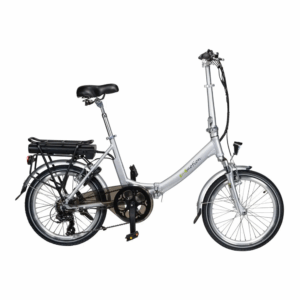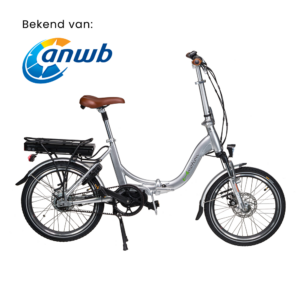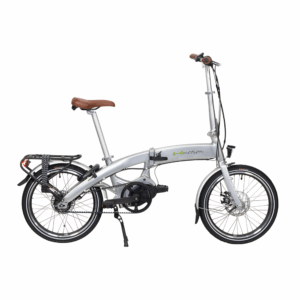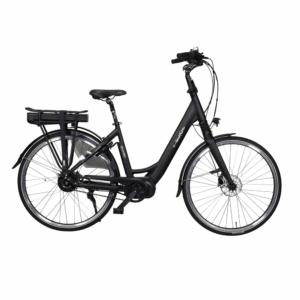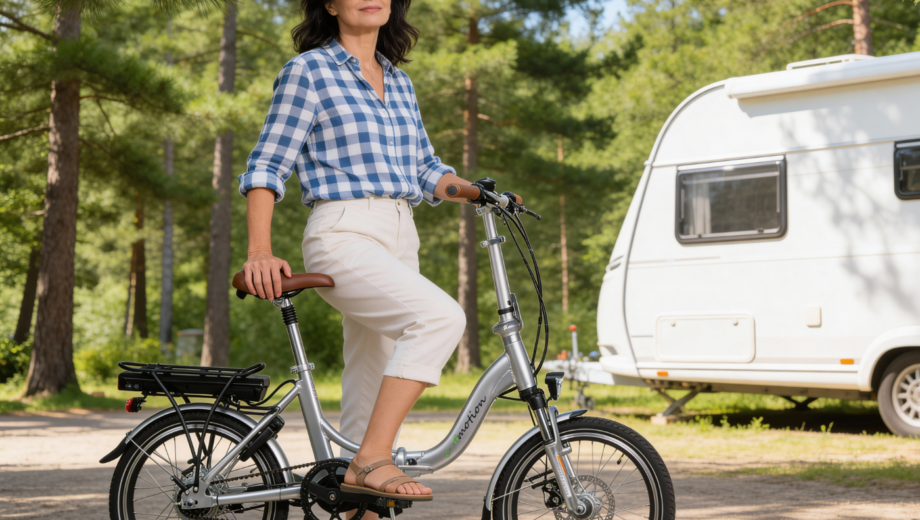
A throttle sounds appealing: just a push of a button and the bike moves on its own, without you having to pedal. However, in most cases, an electric folding bike with a throttle is not legal on public roads in the Netherlands, and it carries risks that you don’t have with a standard electric bike. In this article, we explain what the law says, why we at e-4motion are cautious about throttles, and which alternative is actually safe and legal.
What exactly is a throttle?
A throttle is a button or twist grip on the handlebar that powers the bike’s motor without you having to pedal, similar to the throttle on a scooter. This is different from pedal assistance, where the motor only helps as long as you are pedaling yourself. These two systems are often confused, even though the legal difference is enormous.
What does the law say about a throttle on an electric bike?
According to Dutch and European legislation, an electric bike, also known as a pedelec, may only provide assistance as long as you are pedaling, with a maximum pedal assistance up to 25 km/h and a motor power up to 250 watts. As soon as a throttle can make the bike travel faster than 6 km/h independently—meaning without pedaling—the bike no longer falls under the rules for a standard electric bike. The bike is then considered a moped or light moped and must meet entirely different requirements, such as a license plate, type approval, insurance, and potentially a driver’s license. Without that approval, such a bike is simply not allowed on public roads.
The only legal exception: the walk assist function
There is one situation in which a throttle is permitted: the so-called walk assist function. This is a feature that pushes the bike at a low, constant speed of up to 6 km/h, for example, to let the bike walk alongside you when going up a slope or through soft terrain. This function only works up to walking speed and is intended to assist while walking, not for riding while seated without pedaling. As soon as a throttle drives faster than 6 km/h without pedal input, the limit has been exceeded and the bike is no longer legal as a standard electric bike.
Why we advise against a full throttle
At e-4motion, we deliberately advise against electric folding bikes with a full throttle for several concrete reasons.
- A bike with an illegal throttle may not be ridden on public roads, risking a fine and seizure
- Without type approval and insurance, you may not be covered in the event of an accident
- A bike that can accelerate without pedaling is harder to control than a bike with pedal assistance
- Unmodified, retrofitted throttles fall under what the law calls “tuning,” resulting in the same fines
- Insurers can refuse coverage if it turns out a bike does not meet legal requirements
What are the risks of riding without the proper approval?
If you ride an electric bike that can go faster than 6 km/h via a throttle without pedaling, you are effectively riding an uncertified moped on the bike path. The police are checking for this more frequently, especially now that the number of tuned bikes and fatbikes has increased. A fine and the seizure of the bike are real consequences. Additionally, in the event of an accident, you run the risk that your insurance will not pay out because the bike does not meet the requirements for which it is insured.
Why pedal assistance is the better choice
An electric folding bike with good pedal assistance offers almost all the benefits people look for in a throttle, without the legal risks. The motor helps you when accelerating and on hills, while you maintain control over speed and balance. This not only ensures a legal bike but also a safer riding experience, as you remain actively involved in cycling instead of being passively pushed along.
Advantages of pedal assistance compared to a throttle:
- Fully legal on public roads, without a license plate or driver’s license
- Better control over speed and balance
- Covered by regular bicycle insurance
- No risk of fines or seizure
- A more natural and safer riding experience
What should you look for when purchasing?
Are you unsure if a bike you are considering meets the rules? Ask the seller explicitly if the bike has a CE marking and complies with the European EN15194 standard for electric bikes. Also ask specifically whether any throttle is limited to the legal walk assist function of up to 6 km/h, or if it can propel the bike at higher speeds without pedaling. A reliable seller is always transparent about this.
Check upon purchase:
- CE marking and EN15194 certification
- Whether any throttle is limited to the 6 km/h walk assist function
- Whether the motor only provides assistance as long as you are pedaling yourself
- Whether the pedal assistance stops at 25 km/h
Conclusion: throttle discouraged, pedal assistance recommended
In practice, an electric folding bike with a full throttle is not legal on Dutch public roads and carries unnecessary risks regarding fines, insurance, and safety. A bike with good pedal assistance offers the same convenience and help while cycling, but is fully legal and allows you to maintain control. At e-4motion, we therefore consciously choose electric folding bikes with pedal assistance, so you can hit the road without any worries.
Looking for a legal electric folding bike?
View the full range of electric folding bikes in our webshop. All models are equipped with pedal assistance according to the current European standard, so you can head out with peace of mind. Do you have questions about laws and regulations or about a specific model? Then visit us in Boskoop or Almere. Ellery and Danny will be happy to give you personal and honest advice.